
In 2022, Amazon posted its first annual net loss in almost a decade, even as total revenue kept climbing toward 514 billion dollars for the year. The North America retail segment lost 2.8 billion dollars for the year. The international segment lost 7.7 billion. The company laid off roughly 100,000 people over the following two years, its largest workforce reduction ever. If you only looked at the online store, this looked like a company in real trouble, growing in revenue but bleeding underneath it.
One part of the business never blinked.
The engine nobody sees while they're shopping
Amazon Web Services made up somewhere between 16 and 18 percent of Amazon's total revenue through most of this decade. In the same years, it generated between 57 and 74 percent of the company's entire operating income, depending on the year. In 2022, the worst year for Amazon's retail business in over a decade, AWS operating income actually grew, from 18.5 billion dollars to 22.8 billion. Retail was bleeding. Cloud computing was quietly funding the whole operation.
This is the actual structure of the company, not a minor detail buried in a quarterly filing. Selling low-margin products to households at scale has never been where Amazon makes its money. Renting out computing power to other businesses has.
What that funding actually bought
Because AWS throws off enormous, reliable profit, Amazon has been able to run its retail business closer to breakeven than any competitor could sustain, undercutting on price and pouring money into logistics and same-day delivery without needing the online store itself to turn much of a profit. That's the mechanism behind two decades of retail dominance that looked, from the outside, like a retail company simply outcompeting everyone else on operations.
It was never really a retail company competing on retail terms. It was a cloud computing company using its retail arm as a scale play, subsidised by a business most of its customers have never directly interacted with.
The next resource bet, using the same playbook
That same profit engine is now funding Amazon's next move. Bedrock, the managed service letting other companies build on foundation models without running their own infrastructure. Custom Trainium chips, built to reduce dependence on Nvidia. A four billion dollar investment in the AI research company Anthropic, which trains its models on Amazon's own cloud hardware. Every one of these bets is being paid for out of the same AWS margin that funded the retail expansion for the past twenty years.
This is worth naming plainly, because it's the same pattern that opened this entire series. Whoever controls the era's defining resource ends up running the table. Steel controlled the early 1900s. Oil ran the next fifty years. The automobile defined the middle of the century. Distribution and retail scale took over after that. Now the resource is compute itself, and the company that already had the best cloud infrastructure business on earth is the one best positioned to own the next one.
Where this actually landed
In June 2026, Amazon passed Walmart in annual revenue for the first time, closing 2025 at 716.9 billion dollars against Walmart's 713.2 billion, ending a run that both companies had been converging toward for years. Only four companies have ever held the top spot on the Fortune 500 in its 72 year history: General Motors, ExxonMobil, Walmart, and now Amazon. Steel gave way to oil. Oil gave way to cars. Cars gave way to distribution. Distribution is giving way to compute, and the company on top got there the same way every company in this series did, by controlling the resource nobody was watching closely enough while everyone stared at the storefront.
What this whole series actually teaches
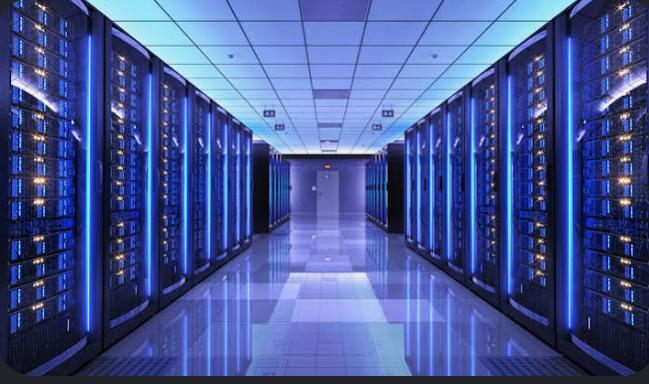
Thirteen companies, thirteen decades, and the same pattern kept showing up in different clothes. The company that wins is usually the one that controls the underlying resource everyone else has to build on top of, whether that's steel, oil, an assembly line, a distribution network, or a data centre humming along in the background while everyone else is looking at the website, rather than the one with the most visible product.
If you're building something today, the real question worth asking is what quiet, unglamorous asset underneath your business actually makes everything else possible, and whether you're investing in that asset like it's the whole point, not just what you're selling. For every company in this series that got it right, that asset was never the thing customers saw first.
References
- FourWeekMBA
- Statista
- Motley Fool
- CNBC
- Amazon 2023 Annual Report (SEC filing)
- Fundamentalis
By Michael Lennard Gnaedinger. © 2026 Gnaedinger Consultancy. All rights reserved.
If any of this sounds familiar.
I work with a small number of founders and CEOs each year. The conversation starts here.