
The Observation
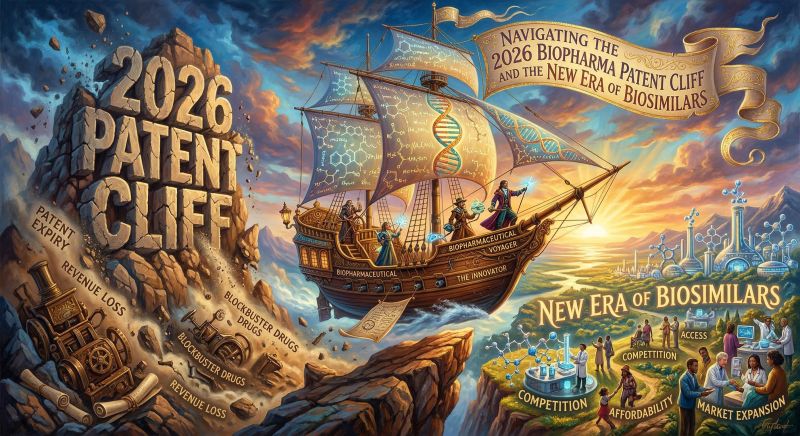
The year 2026 marks Day Zero for a historic revenue shift in the pharmaceutical industry. Industry analysts estimate that between $200 billion and $236 billion in annual sales will face generic or biosimilar entry by 2030, with high-volume diabetes, immunology, and cardiovascular franchises taking the first significant hits this year.
The Analysis
The threat to branded revenues is accelerating due to a pivotal 2026 FDA policy shift that effectively collapses the distinction between biosimilarity and interchangeability. This mandate allows lower-cost biosimilars to be automatically substituted at the pharmacy level with minimal friction, profoundly altering payer protocols. To fill these massive revenue holes, multinational pharmaceutical companies are no longer just licensing fast-follower programs; they are actively acquiring highly innovative, first-in-class assets. The global innovation axis is shifting, with Chinese biotechs now originating one-third of new compounds in U.S. pipelines, making them prime targets for these critical acquisitions.
The Tactical Step
Reevaluate your portfolio risk and payer strategies immediately. Payers must adjust their utilization management protocols to favor these newly interchangeable biosimilars. For manufacturers facing exclusivity losses, transition your strategy toward acquiring highly innovative assets, potentially looking to emerging global markets, to rebuild your pipeline before the revenue cliff severely impacts your bottom line.
Question for the network
How is your organization preparing for the financial impact of the 2026 patent cliff and the streamlined approval of interchangeable biosimilars?
References
- The Dragon Awakes: Charting the Unstoppable Growth of Chinese Pharmaceuticals in the Global Market, DrugPatentWatch
- The biopharma industry outlook on 2026: Optimism and tension, BioPharma Dive
By Michael Lennard Gnaedinger. © 2026 Gnaedinger Consultancy. All rights reserved.
If any of this sounds familiar.
I work with a small number of founders and CEOs each year. The conversation starts here.