
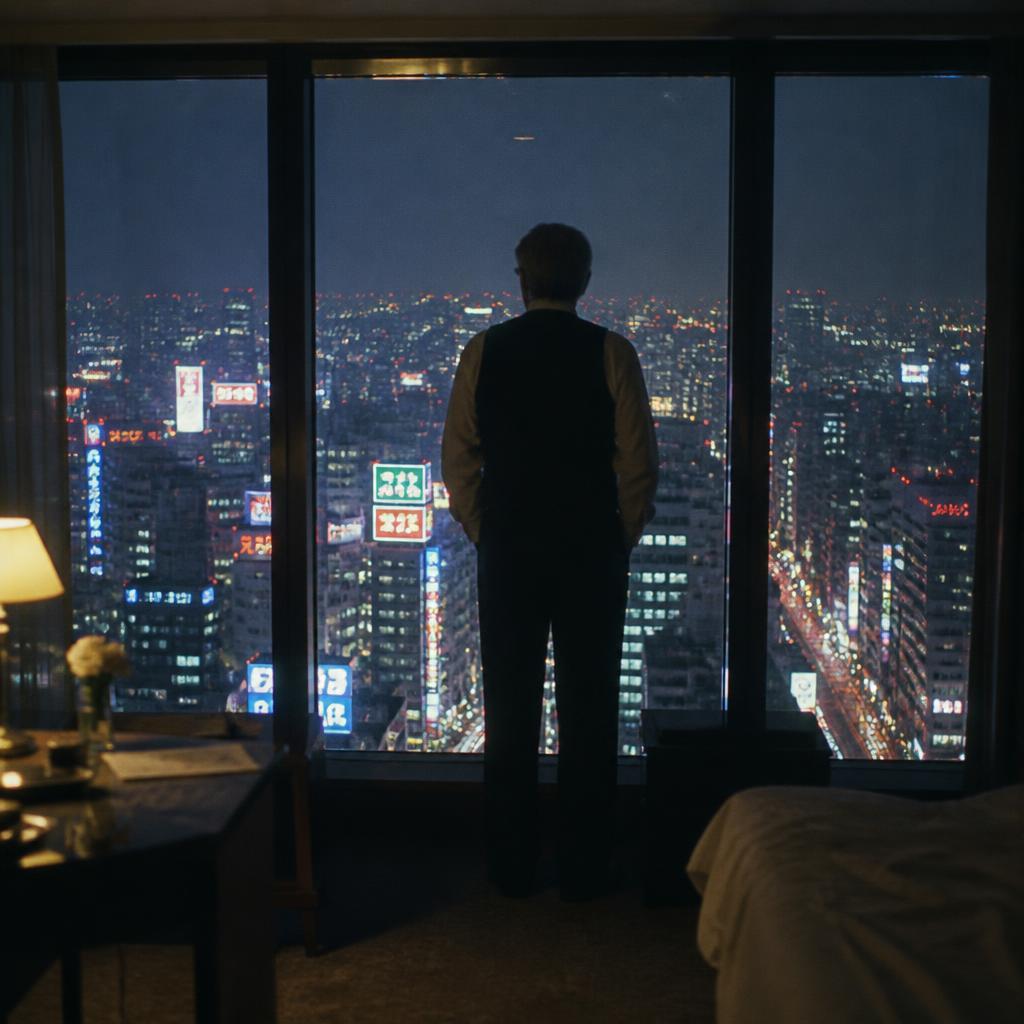
On 8 February 1983, a 73-year-old man with terminal lung cancer stood in a Tokyo hotel room and told his senior executives that Samsung was going to spend roughly 400 million dollars entering a business it had no real capability in, against an industry everyone considered unbeatable.
His name was Lee Byung-chul. He founded the Samsung Group. And the decision he made that day, now remembered in Korean business history as the Tokyo Declaration, is one of the clearest examples I have come across of a leader making a call he knew he personally would not live to see through. He did not. Lee died in November 1987, four years and ten months after the Tokyo Declaration. What he built in that window, and what it became afterward, is worth sitting with.
A country with nothing to build from
In 1953, South Korea's per-capita income was lower than Somalia's or Haiti's. Roughly 20 million people, an agricultural economy in ruins, and an adult literacy rate around 20 percent. There was no precision manufacturing tradition, no advanced engineering workforce, no capital markets capable of financing large-scale industrial development. None of the ingredients you would look for if you were trying to predict which country might, within a single working lifetime, come to manufacture the majority of the world's memory chips.
The bet nobody on the board wanted
By 1983, Samsung was a large, diversified conglomerate but had no meaningful position in semiconductors. The Japanese industry was at its peak and considered structurally uncatchable. The Americans had already ceded the memory market to Japan. Korea's technological base was well behind both. Lee's reasoning was straightforward: semiconductors were going to become the foundational input technology for every future piece of consumer electronics. If Samsung did not build the capacity to manufacture them now, it would have no role in whatever came next. His senior executives were unanimously opposed. He committed the money anyway.
Samsung produced its first commercial DRAM chip, a 64-kilobit part, about ten months after the Tokyo Declaration. Behind the state of the art, but already outpacing what any contemporary analyst expected. From there the cadence was relentless: 1-megabit in 1986, 4-megabit in 1988, 16-megabit in 1990, 64-megabit in 1992, the last of these arriving roughly six months ahead of comparable designs from Toshiba, NEC and Hitachi. Samsung passed Toshiba to become the world's largest DRAM manufacturer that same year. By 1993 it was producing more DRAM revenue than every Japanese semiconductor manufacturer combined. Japan's memory industry never took the position back.
The second company nobody planned for
Samsung is only half the current story. The other half, SK Hynix, came from a completely different direction. It began life in 1983 as Hyundai Electronics Industries, absorbed LG Group's semiconductor operations in 1999, became Hynix in 2001 and SK Hynix after the SK Group acquired it in 2012.
For most of its history, SK Hynix ran a distant second to Samsung. That changed with the arrival of high-bandwidth memory, the specialised stacked-DRAM technology that modern AI accelerators depend on for core performance. SK Hynix positioned itself early as the primary HBM supplier to Nvidia. By the second quarter of 2025 it held roughly 62 percent of the global HBM market, against Samsung's 17 percent and Micron's remainder. For several quarters in 2025, SK Hynix's overall DRAM position briefly overtook Samsung's outright, ending a 33-year run at the top that Samsung has since largely clawed back as its own HBM yields improved.
What the AI boom turned this into
The industry Lee bet on has become the actual physical bottleneck underneath the AI buildout. The global HBM market is projected to grow from roughly 38 billion dollars in 2025 to about 58 billion in 2026, a 53 percent jump driven almost entirely by the capital spending of Nvidia, AMD, Google, Amazon, Microsoft and Meta on AI training infrastructure. Nearly all of that supply comes out of Korean fabrication facilities, with the rest from Micron in the US.
Samsung spent roughly 25 billion dollars on memory operations in 2025, SK Hynix roughly 21 billion, and both have announced 2026 capex above 30 billion each. The Yongin Semiconductor Cluster is slated to receive around 470 billion dollars in cumulative investment by 2050, which would make it the single largest semiconductor manufacturing complex ever built anywhere. A country whose 1953 income was lower than Somalia's now controls the substantial majority of the manufacturing capacity that the entire AI industry depends on to function.
The part I keep coming back to
Lee Byung-chul made the decision knowing, with reasonable certainty given his diagnosis, that he would not be there to see whether it worked. He committed the company's reserves, absorbed the unanimous opposition of the people who worked for him, and set in motion a trajectory that took a full decade to prove itself and four decades to become what it is today.
Question for the network
Most leadership decisions get evaluated by whether the person making them sticks around long enough to claim credit or bear the consequences. Lee's did not have that luxury, and he made it anyway. That is a different kind of conviction than the kind we usually talk about in business writing, and I think it deserves more attention than it gets.
References
- S&P Global
- KED Global
- Counterpoint Research
- SK Hynix 2026 industry outlook
By Michael Lennard Gnaedinger. © 2026 Gnaedinger Consultancy. All rights reserved.
If any of this sounds familiar.
I work with a small number of founders and CEOs each year. The conversation starts here.