
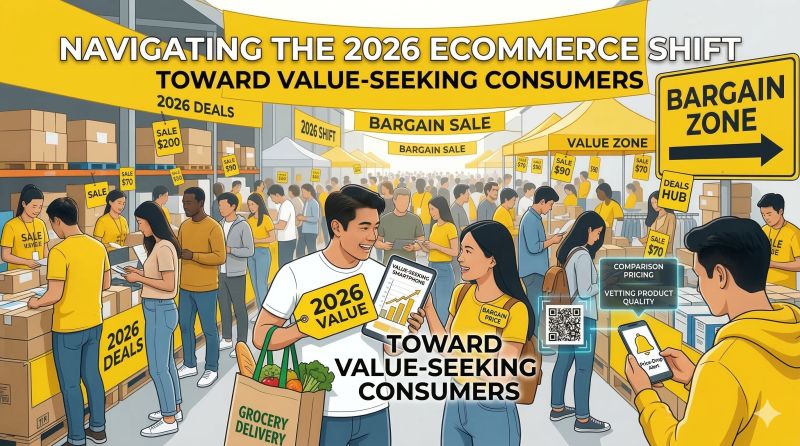
The growth at all costs era is over. As inflation scars permanently alter shopping habits, here is how retail leaders are adapting to the new value seeker mindset.
The Observation
The ecommerce landscape has undergone a permanent structural shift. Recent data indicates that 47% of global consumers now identify as value seekers, who intentionally sacrifice convenience for savings. Furthermore, nearly 70% of retail executives agree these deal driven behaviors are not a temporary reaction to past inflation but a lasting recalibration of household spending.
The Analysis
Consumers are carrying deep inflation scars, making them highly protective of their budgets. To combat rising supply chain costs, many brands attempted shrinkflation by reducing product sizes while maintaining prices. However, this tactic carries immense risk in the 2026 psychology of fairness. Data shows that 64% of consumers view shrinkflation as an unfair practice, and 71% will immediately switch brands if changes lack transparency. Interestingly, price and value are no longer synonymous. Up to 40% of a brand's perceived value is now driven by non price factors such as customer service excellence, trust, and a frictionless post purchase experience.
The Tactical Step
Transition your strategy from simple price competition to a model of retention led ecommerce. Focus on building fairness into your value proposition by ensuring complete transparency regarding product changes or packaging. Audit your post purchase experience and partner with your logistics providers to prioritize revenue retention and maintain the high touch human support necessary to preserve customer trust.
Question for the network
How is your brand balancing the demand for lower prices with the need to provide high quality customer experiences this year?
References
- 2026 Ecommerce Trends: Navigating Value Seeking Consumers and the Return Crisis
By Michael Lennard Gnaedinger. © 2026 Gnaedinger Consultancy. All rights reserved.
If any of this sounds familiar.
I work with a small number of founders and CEOs each year. The conversation starts here.