
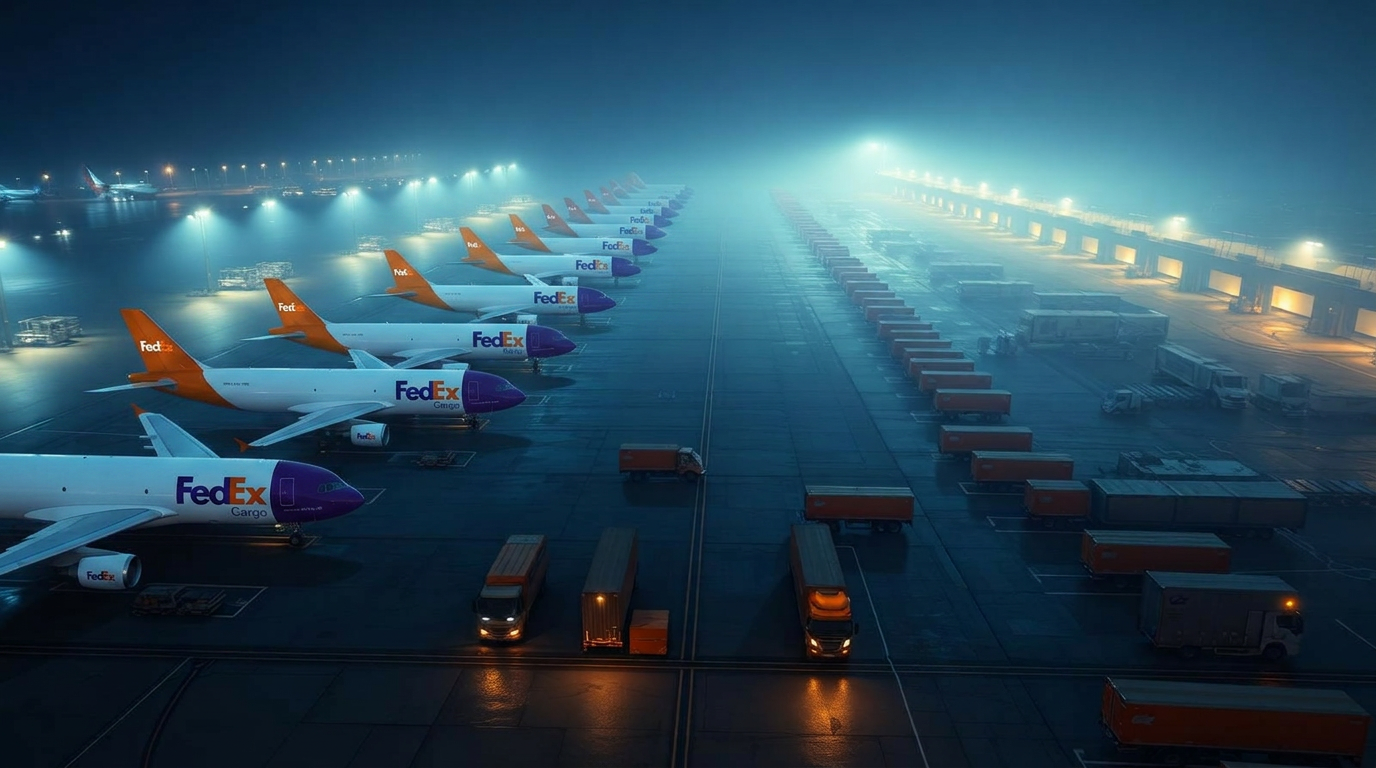
The Observation
FedEx paid 4.4 billion euros for TNT Express in 2016. The board wanted a European ground network and the spreadsheets said yes. Two years later FedEx had booked a 1.4 billion dollar integration bill, up from an original estimate of 800 million.
TNT ran parcels across Europe through trucks and local depots built up over decades. FedEx runs the world through air hubs. Memphis to Paris to Guangzhou. One model spreads freight across highways. The other funnels it through the sky. Bolt one onto the other and something has to give.
It got worse. In June 2017 the NotPetya cyberattack hit TNT hard, partly because some of its systems ran through Ukraine, right where the malware started. TNT spent months running on manual processes. Backlogs piled up. Customers who had already been watching the integration wobble started calling UPS and DHL instead. FedEx responded by accelerating the whole program and pouring more money into ripping out TNT's legacy infrastructure and rebuilding it on FedEx's stack. That acceleration is exactly why the bill jumped from 800 million to 1.4 billion.
Rewind to 1989. FedEx bought Flying Tiger Line for 880 million dollars, the largest all-cargo airline on the planet at the time. Route rationalisation dragged on far longer than planned. Pilots got folded into a combined seniority list through third-party arbitration and plenty of them fell hundreds of places overnight. Two years after that deal closed, FedEx's stock fell for the first time in company history, and executives pointed straight at the Flying Tigers integration and the international expansion that followed it.
Same company. Same mistake. Twenty-seven years apart.
The Analysis
Financial due diligence looks at revenue, market share, customer lists. It answers, is this worth buying. Operational due diligence asks a different question: what happens at 4am when a driver clocks in and the sorting facility runs on a system nobody at head office has ever touched. Most boards do the first kind of diligence beautifully and skip the second one entirely.
Nobody maps the operating model. Nobody asks what breaks when you change one step in a depot that sorts tens of thousands of parcels a night. You can map an org chart from a conference room. You cannot map an operating model without walking the floor.
Every board deck has a synergy slide. Year one: some number. Year two: a bigger number. Up and to the right, like clockwork. What the slide never shows is that dis-synergies land first. Customers leave. Good people quit before the new org chart even settles. By the time the promised synergies show up, you have already lost the relationships that made the target worth buying in the first place.
Cultural integration takes three to five years, minimum. Technology integration often takes longer, and that is before a NotPetya-style event forces you to accelerate everything at once. Deal models love the 18 to 24 month full-integration timeline. It is fiction, and everyone building the model knows it is fiction, and it goes in the deck anyway because a 5-year timeline does not clear the investment committee.
The acquisitions that work protect what made the target valuable in the first place. TNT's value was its European road network, built over decades of local relationships. Flying Tigers' value was its international routes and its Asian landing rights, won the hard way over forty years. FedEx tried to remake both in its own image, on its own systems, on its own timeline, and damaged the very thing it paid a premium for.
The Checklist
A deal committee that cannot explain how the target operates at the frontline level has no business signing anything. Financial models do not survive contact with a sorting facility at 4am. The most expensive acquisition is not the one with the biggest price tag, it is the one you cannot actually integrate. Synergy slides go up and to the right. Dis-synergies arrive first and nobody puts them in the deck. FedEx learned all of this in 1989. By 2016 it had forgotten every bit of it, and the combined bill across both deals ran past 2 billion dollars in write-downs and integration costs.
Question for the network
If your board can present a flawless synergy slide but cannot describe what happens on the loading dock at 4am, should that deal even reach a vote? The answer showed up twice at the same company, twenty-seven years apart, and cost more the second time.
By Michael Lennard Gnaedinger. © 2026 Gnaedinger Consultancy. All rights reserved.
If any of this sounds familiar.
I work with a small number of founders and CEOs each year. The conversation starts here.