
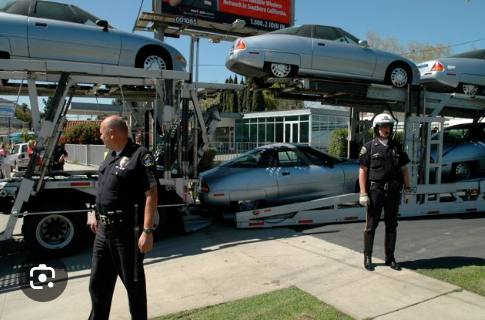
In 1996, Elon Musk was still a university student. The word Tesla meant a Serbian inventor, not a car company. That same year, General Motors launched the first purpose-built, mass-produced electric car from a major automaker in the modern era. It was called the EV1, and for a brief window, GM was roughly a decade ahead of the company that would eventually define the entire category.
A regulation forced the innovation, and it was genuinely good
California passed a zero-emission vehicle mandate in 1990, requiring the biggest automakers to sell an increasing share of emission-free cars if they wanted to keep selling in the state at all. GM's response, built on its well-received 1990 Impact concept car, became the EV1. Aerodynamic composite body, regenerative braking, a lightweight aluminum backbone chassis. GM spent more than a billion dollars developing it.
Drivers loved it. GM's own brand manager described the feedback from EV1 lessees as wonderfully maniacal loyalty. People who drove one talked about it the way people now talk about their first Tesla, a genuinely different kind of car experience nobody else was offering yet.
Then the reason for building it started to disappear
GM never sold the EV1 outright. It was lease-only, with the purchase option contractually blocked. That detail matters for what came next. Through the late 1990s, the petroleum industry and auto trade groups lobbied hard against California's mandate, and by 2002 they'd succeeded in getting it weakened. The regulatory pressure that justified the EV1's existence in the first place had mostly evaporated.
GM's response was immediate. Production had already stopped in 1999. In 2002, the company told lessees it would be recalling every car, reversing an earlier promise that it had no intention of taking them back. Fifty eight drivers sent letters and deposit checks offering to buy their own cars, waive all GM liability, and cover every future repair themselves. GM returned the checks and refused.
What happened to the cars themselves
GM loaded the EV1s onto trucks, hauled them to a facility in Arizona, and crushed nearly all of them. Photographs from the time show stacks of flattened cars. Roughly 40 survived, donated afterward to museums. The company's official reason was safety, a car with 2,000 unique parts and no long-term supply chain for replacements was, in their telling, unsafe to keep running. Critics, and eventually a documentary called Who Killed the Electric Car, argued the real motive was closer to home: making sure the zero-emission mandate couldn't be pointed back at GM as proof the technology already worked.
The part that makes this different from a normal cancelled product
Rick Wagoner, the CEO who made the final call to end the programme in 2003, said years later that killing the EV1 and not putting real resources into hybrids instead was one of the biggest mistakes of his career. This is the person who made the decision, looking back years later and saying it plainly, not a competitor's criticism or a documentary's framing.
GM was ahead, genuinely and measurably ahead, of a market that didn't exist yet in any serious commercial form. The company built the thing, proved people wanted it, then dismantled it the moment the regulatory stick disappeared, rather than asking whether the underlying idea had value on its own.
What this decade actually teaches
Some companies fail because they can't build the future. GM's EV1 story is the opposite problem. It built the future, ran it successfully for three years, and then chose to destroy it because the only reason on the books for building it in the first place was regulatory compliance rather than genuine belief in where the market was heading.
If the only reason you're building something is that a regulator is forcing your hand, you'll cancel it the moment that pressure lifts, even if it turns out to be the right product a decade too early. GM's own CEO eventually said so himself.
References
- Wikipedia
- NPR/OPB
- KUOW
- History.com
- Conceptcarz
- TopSpeed
By Michael Lennard Gnaedinger. © 2026 Gnaedinger Consultancy. All rights reserved.
If any of this sounds familiar.
I work with a small number of founders and CEOs each year. The conversation starts here.