
I previously published an overview piece ranking the biggest company in the world by revenue, decade by decade, from 1900 to today. This is article 3 of a 13 part series digging into each one properly.
In the last piece I wrote about how Henri Deterding took a wounded rival, Shell Transport, and used it as a base to invade Standard Oil's home market directly, drilling in Oklahoma and California through the 1910s. By the late 1920s, that aggression had a problem. It worked too well.
Too much oil is its own kind of disaster
Every major producer was drilling hard. New fields kept coming online, especially East Texas. Supply outran demand, and prices started collapsing everywhere at once, including in markets like India, where Standard Oil of New York and a Shell subsidiary were cutting prices against each other hard enough to threaten both companies' profits.
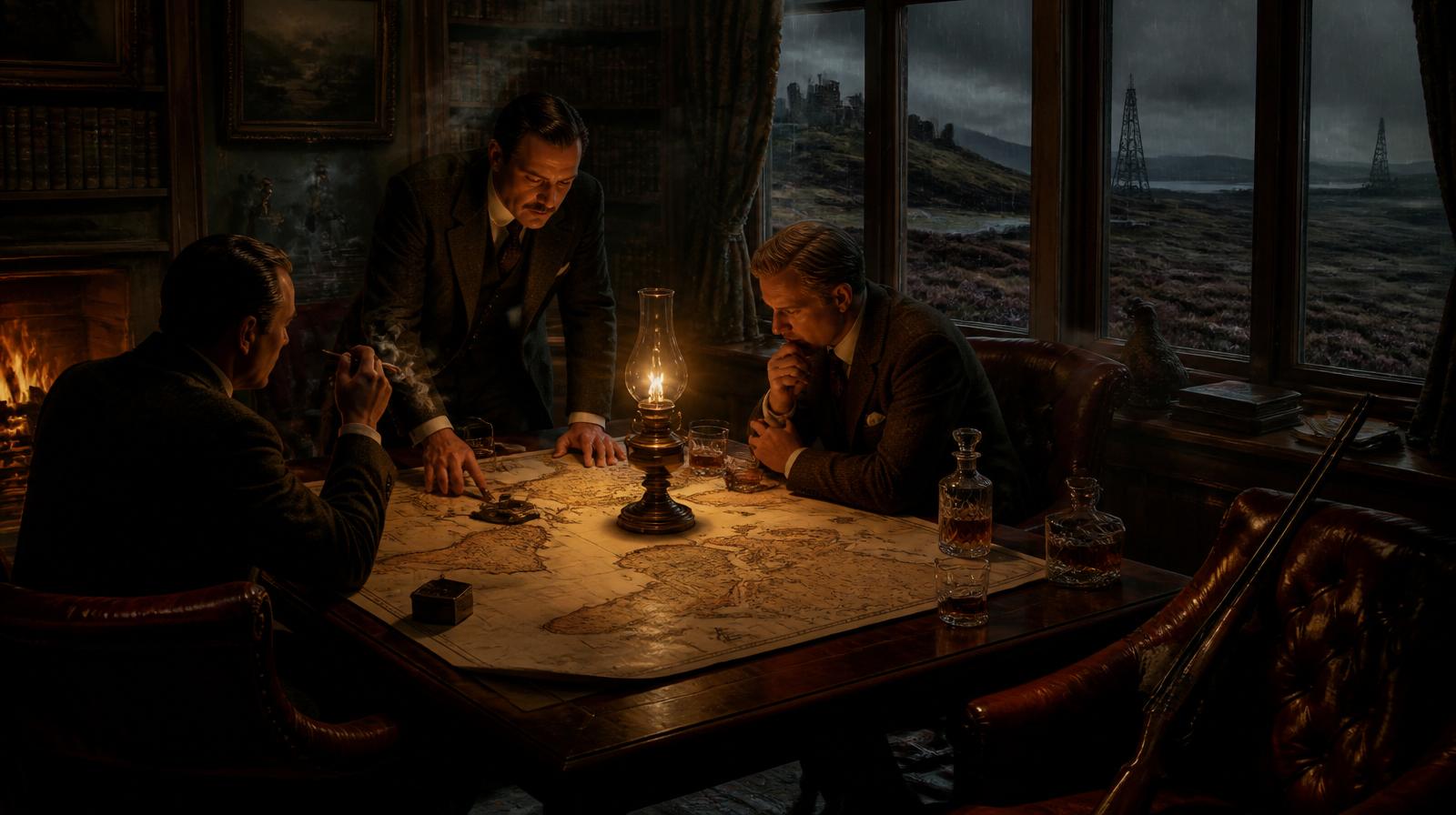
Deterding, Walter Teagle of Standard Oil of New Jersey and Sir John Cadman of Anglo-Persian needed to talk. So in August 1928, Cadman rented Achnacarry Castle in the Scottish Highlands and invited his two biggest rivals up for what was officially described as a grouse shooting trip.
What actually happened in that castle
By the time the three men had retired to the library to smoke cigars, they had built a plan to fix the world's oil markets. Seven principles, later called the As-Is Agreement. Freeze everyone's market share at 1928 levels. Fix prices using a formula pegged to Gulf of Mexico delivery costs, regardless of where the oil actually came from. Share existing facilities. Coordinate new refinery construction. Stop competing on price entirely.
It worked exactly as intended, and it stayed completely secret for 24 years. Governments did not know. Regulators did not know. The public had no idea the price of oil in their own country had quietly stopped being set by competition. A US Senate subcommittee only uncovered the whole thing in 1952, calling it the international petroleum cartel in a report that described the agreement as possibly the most amoral deal any group of industrialists had ever drawn up.
Gary called competition immoral. Deterding proved him almost right.
Read the last two articles in this series together and something clicks. Elbert Gary at U.S. Steel called competition immoral back in 1901 and tried to build a lawful, visible version of price coordination through his Gary dinners. It did not fully work. U.S. Steel still lost market share for decades, and the whole arrangement drew a federal antitrust suit.
Deterding watched what aggressive competition actually did to margins once he had already won, then built something far more effective than Gary's approach: a fully secret cartel with no paper trail, no dinners anyone could subpoena, no plausible legal defence because nobody outside the room ever knew it existed. It shaped global oil prices for over two decades before anyone found out.
The cost showed up somewhere else entirely
The agreement did not just fix prices. It actively suppressed development of cheap Middle Eastern oil to protect the value of higher-cost production elsewhere, in the US and elsewhere the participating companies had already sunk capital. That decision held back Gulf oil development until after World War II, and it left a legacy of resentment in Iraq and Iran that outlasted every executive who signed the original deal.
That is the part worth sitting with. The three men in that castle solved their own problem completely. They just moved the cost of solving it onto people who were not in the room and would not find out for decades that it had happened.
The lesson for anyone building something today
Once you have won, the temptation is to quietly agree with your biggest rivals that nobody needs to compete anymore, rather than keep fighting for ground you have already taken. That agreement can work brilliantly for everyone sitting at the table. It rarely works out well for anyone who was not invited to it, and eventually somebody outside the room finds out what was decided without them.
Question for the network
If your biggest competitors quietly offered you a way to stop competing tomorrow, on terms that protected everyone in the room, would you be able to name who ends up paying for it? Somebody always does. In 1928 it took 24 years for the bill to arrive.
References
- EBSCO Research Starters
- Encyclopedia.com
- The Scotsman
- Al Jazeera
- Wikispooks
By Michael Lennard Gnaedinger. © 2026 Gnaedinger Consultancy. All rights reserved.
If any of this sounds familiar.
I work with a small number of founders and CEOs each year. The conversation starts here.