
The Observation
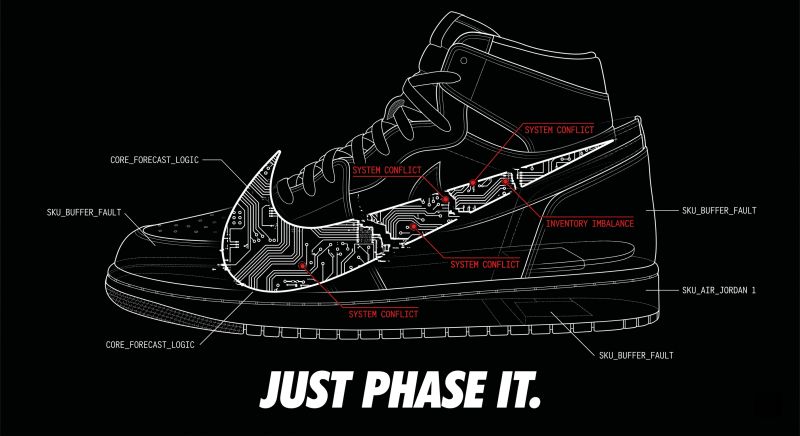
In 2000, Nike attempted to outrun its legacy logistics with a $400 million supply chain overhaul. The centerpiece failed. A rollout of demand-forecasting software from i2 Technologies generated thousands of ghost orders for the Air Garnett while failing to produce enough Air Jordans. This inventory imbalance cost the company $100 million in lost sales. Nike stock plummeted by 20 percent in a single day.
The Analysis
The implementation was not a failure of code. It was a failure of methodology. Nike management prioritized speed over operational stability by executing a Big Bang rollout. They pushed global functionality live before the system could map their complex SKU architecture. Resilience was only restored when the company abandoned the all-at-once approach. They pivoted to a geographic phased rollout that prioritized human training over blind faith in algorithms.
The Tactical Step
Isolate the risk: deploy enterprise modules by business unit or geography to prevent total organizational paralysis.
Limit customization: enforce the 15 percent rule. If you customize more than 15 percent of out-of-the-box code, you are building a liability.
Mandate simulation: lock teams out of live environments until they pass 140 hours of simulation testing.
Clean data early: treat data migration as a day-one business priority rather than a technical task at the end of the project.
Question for the Network
Are you rushing your digital transformation to meet an arbitrary deadline, or are you building for systemic stability?
References
- Nike Supply Chain and i2 Technologies Case Study. 2026 ERP Implementation Success Report.
By Michael Lennard Gnaedinger. © 2026 Gnaedinger Consultancy. All rights reserved.
If any of this sounds familiar.
I work with a small number of founders and CEOs each year. The conversation starts here.