The Observation
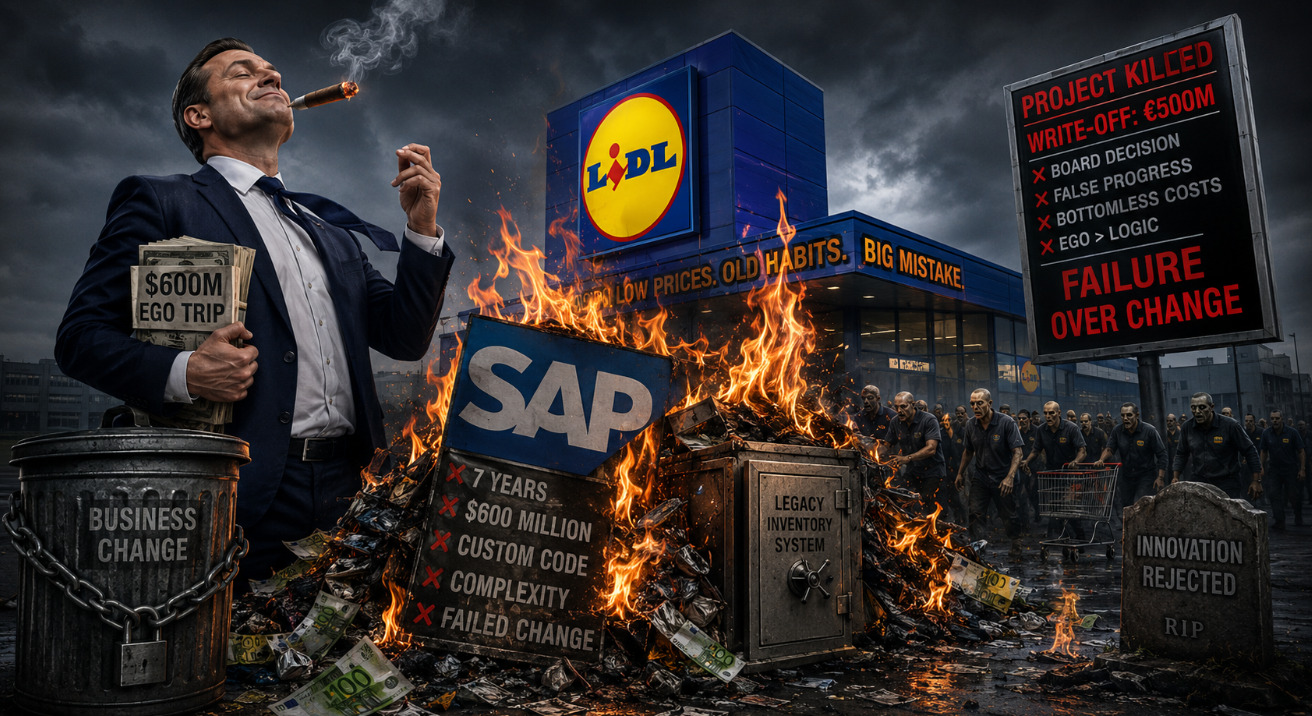
Lidl spent seven years and roughly 600 million dollars trying to implement SAP across its operations. In 2018, the discount grocery giant killed the project. They wrote off half a billion euros and reverted to their legacy inventory system. This was a structural collision between a standardized platform and a board that refused to change its core logic.
The Analysis
Lidl built its empire on tight margins and highly efficient logistics. Their custom legacy system valued inventory based on the purchase price. SAP for Retail operates on a completely different standard and values inventory based on the retail price. Faced with this difference, Lidl chose to force the new software to act like the old system.
The implementation team heavily customized the SAP platform to replicate outdated internal workflows. Every customization increased system complexity and broke the standard upgrade path. The cost of maintaining this custom code skyrocketed. Early rollouts in smaller markets created a false sense of progress.
Activity substituted for validation. The board eventually ran the numbers. They had to choose between funding a bottomless IT sinkhole or fundamentally changing how they ran their grocery business. They chose to cut their losses.
The Tactical Step
Treat enterprise software migrations as business model decisions. Stop forcing new software to replicate your old processes. Configure the software out of the box and change your internal habits to match it.
Demand proof of viability early. Force your vendors to deploy the system in your most demanding environment first. Halt the project before you sink millions into custom code if the core data architecture misaligns with your business.
Question for the network
When implementing new enterprise software, does your organization change its processes to fit the system, or do you spend millions trying to make new technology mimic your old habits?
References
- Henrico Dolfing: Case Study 12, Lidl's €500 Million SAP Debacle.
- ERP Perspective: Lidl's ERP Project, Why a Discount Giant Abandoned SAP After Spending Millions.
By Michael Lennard Gnaedinger. © 2026 Gnaedinger Consultancy. All rights reserved.
If any of this sounds familiar.
I work with a small number of founders and CEOs each year. The conversation starts here.