
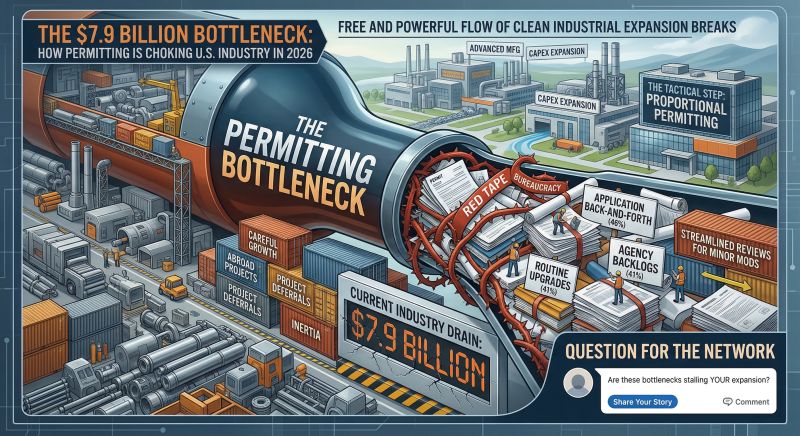
The Observation
We talk a lot about fixing supply chains and bringing manufacturing back home, yet we are tripping over a massive hurdle right in our own backyard. A new report from the National Association of Manufacturers and the Foundation for American Innovation puts a price tag on the problem: the broken federal permitting process is draining over 7.9 billion dollars from the industry. This is a direct tax on American growth.
The Analysis
For those on the ground, permitting feels like an endless pileup of local, state, and federal red tape. The real issue is rarely the environmental standards themselves, but the sheer administrative friction involved. Roughly 46 percent of these delays come from constant back-and-forth on applications, while another 41 percent are simply due to agency backlogs.
The system treats simple, routine upgrades as if they were massive, experimental projects. When leadership can no longer predict a timeline or be sure a decision will hold up in court, they do the only logical thing: they hesitate. They scale back, look for easier locations abroad, or kill the projects entirely.
The Tactical Step
If we want to be competitive, we have to stop making the easy stuff hard. Industry leaders should be pushing for proportional permitting. Small changes and minor tweaks should not require the same marathon review as a brand new factory.
The numbers tell the story. 51 percent of manufacturers say easing the path for small upgrades would make the biggest difference. 44 percent want faster renewals for sites where nothing has fundamentally changed. Until we clear these bureaucratic hurdles, domestic expansion will continue to stall out.
Question for the network
Is your team seeing projects get sidelined by these kinds of procedural bottlenecks this year?
References
- National Association of Manufacturers: America On Hold Report
By Michael Lennard Gnaedinger. © 2026 Gnaedinger Consultancy. All rights reserved.
If any of this sounds familiar.
I work with a small number of founders and CEOs each year. The conversation starts here.