
The Observation
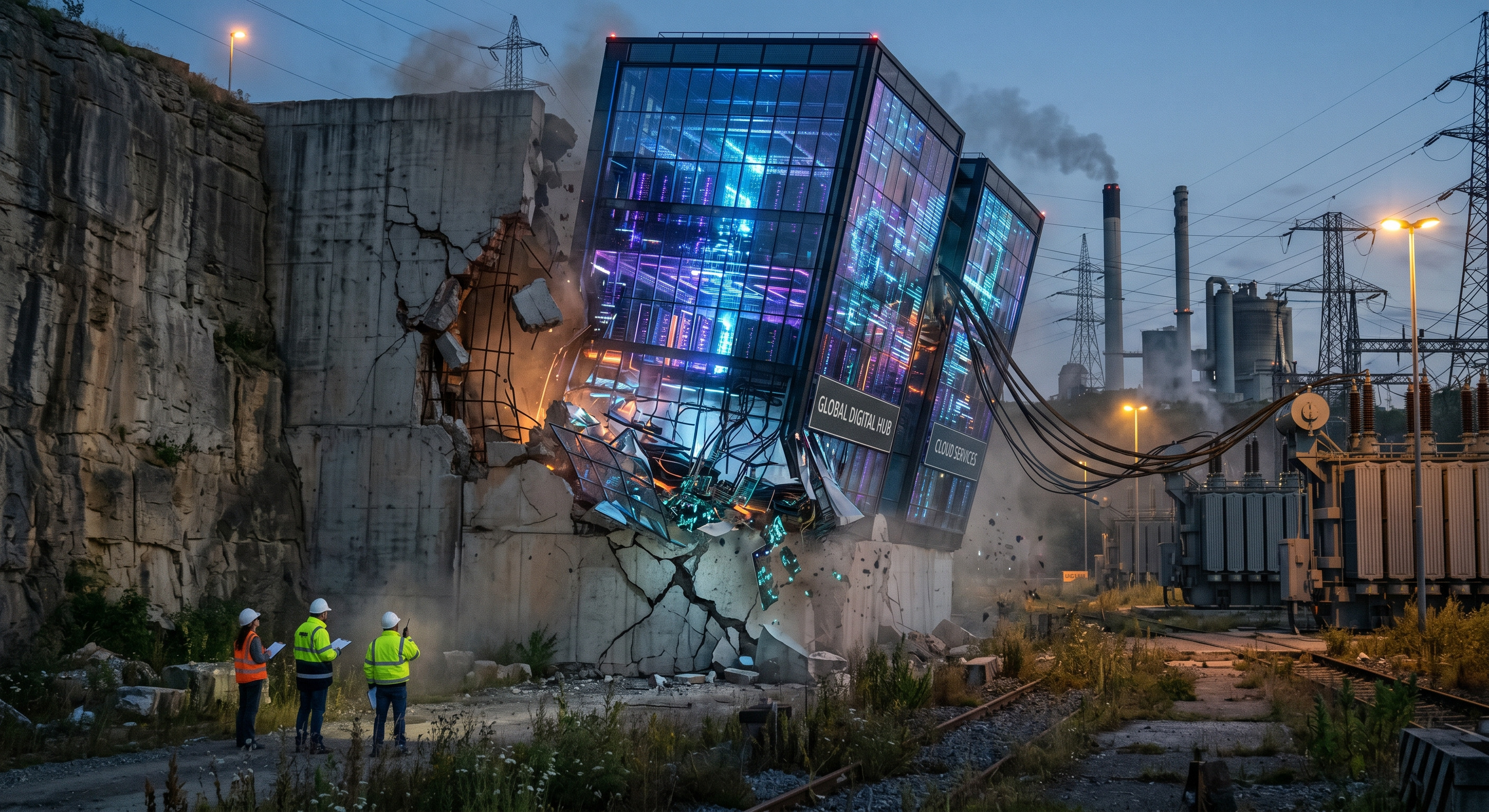
Software is nothing without the physical machinery supporting it. Companies spend billions building advanced platforms while ignoring the power grids and factories required to run them. The digital economy is about to smash into a concrete wall of physical reality.
The Analysis
Modern tech demands absurd amounts of electricity and concrete. Power grids are already buckling under the weight of massive new data centers. It is a textbook case of the Jevons paradox. Making systems more efficient just makes them cheaper to run. That cheapness drives explosive growth, which increases the total amount of power needed. This surge is destroying corporate climate pledges.
Executives spend all their time obsessing over digital transformation. They fail to notice that the actual raw materials are running out. A modern microchip factory drinks up to 10 million gallons of ultrapure water every single day. That equals the water usage of 33,000 households. This happens while the planet faces a projected 40 percent freshwater deficit by 2030.
The physical hardware relies entirely on rare earth metals. This supply chain is tightly concentrated in a few volatile regions, leaving companies exposed to sudden trade wars and price spikes. Recycling is not saving us. We throw away tens of millions of tons of e-waste each year, burying billions of dollars worth of recoverable minerals in landfills.
Even the cloud relies on real objects. Undersea cables carry almost all international internet traffic. These cables face constant threats from ship anchors, maritime espionage, and long repair delays. The physical world is reasserting its dominance over software theory.
The Tactical Step
Audit your physical supply chain today. Secure your access to the power, water, and raw materials that actually keep your software online. Software cannot fix a hardware shortage. You need to re-engineer your systems to use fewer materials and less power.
Question for the Network
Are you securing the actual infrastructure your business needs, or are you still pretending that software runs on magic?
References
- Sharma, P. (2024). The Jevons Paradox In Cloud Computing: A Thermodynamics Perspective. Schneider Electric.
- Semiconductor Digest (2025). Managing the Impact of Semiconductor Manufacturers' Use of Freshwater.
- Kumar, S. (2025). Economic Challenges in Earth Metal Supply Chains. IJSSER.
- UN / ITU / UNITAR (2024). The Global E-waste Monitor 2024.
- ISRM (2025). Global Crisis Watch 372 and 373: Cyber-Physical Vulnerabilities in Critical Infrastructure.
- BETA, CNRS (2024). Digitalisation, Energy Demand, and Economic Growth.
- World Resources Forum (2026). Boundless Innovation, Within Planetary Boundaries.
By Michael Lennard Gnaedinger. © 2026 Gnaedinger Consultancy. All rights reserved.
If any of this sounds familiar.
I work with a small number of founders and CEOs each year. The conversation starts here.