
The Observation
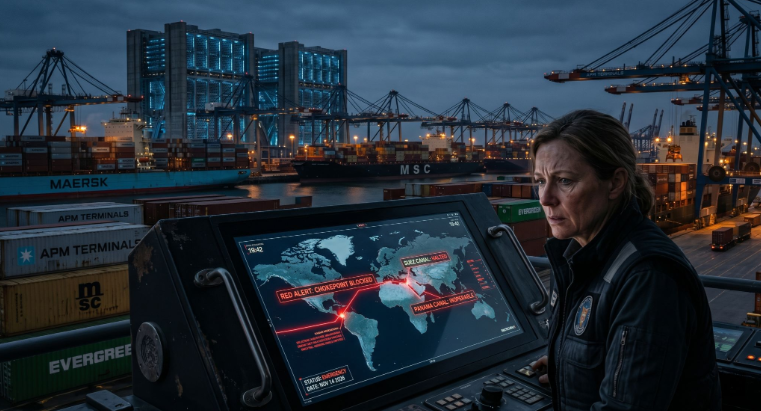
Disruption isn't just a phase anymore. We are looking at a total rewrite of global risk. As of April 2026, the main maritime arteries are basically closed. This has trapped a massive amount of tanker volume and caused a 91 percent collapse in dry bulk transits. The industry is finally being forced to reprice what we used to call efficiency. The reality is much grittier than the theory.
The Analysis
We haven't seen an energy shock like this since the 70s. For manufacturing, the fight for power isn't just against the factory next door anymore. You are now competing with AI data centers that have bottomless pockets. Hyperscalers are basically vacuuming up gas turbines and grid fuels, which is killing any hope of expansion for mid-market players. On the water, it is even grittier. Insurance premiums in some corridors have jumped 12-fold. When that coverage vanishes, your permission to operate is essentially deleted on the spot.
The Strategic Leaders
Kuehne + Nagel (Switzerland). They remain the benchmark for operational excellence. By focusing on high-yield verticals like healthcare, they successfully decoupled revenue growth from pure volume.
DHL Global Forwarding (Germany). They dominate the skies. Their strength lies in a vast, standardized infrastructure that minimizes variance across global lanes.
DSV (Denmark). The acquisition of DB Schenker solidified them as a lean powerhouse. Their asset-light model is a masterclass in scale.
The Tactical Step
Stop waiting for things to go back to normal. As a leader, your job is basically to be a heat shield. You have to filter out the chaos at the top so the team gets a signal they can actually run with. Use this audit to protect your EBITDA before the noise drowns you out:
1. Energy resilience. Map your power reliability. Check if you are fighting a local data center for the last 5 percent of the grid.
2. Geographic decoupling. Move faster on your US Plus One strategy. You need regional hubs like Mexico to bypass maritime chokepoints.
3. Nth tier visibility. Audit the energy exposure of your suppliers.
4. Contractual hardening. Find your war-risk exclusions before the cancellation notice hits your desk.
5. The Stoic pivot. Focus on what you can actually control. Replace reactive panic with the data-driven routes you rehearsed last quarter.
Question for the network
Energy reliability now matters more than labor costs when picking a location. Is your team still chasing the lowest margin, or are you finally investing in the premium of trust?
By Michael Lennard Gnaedinger. © 2026 Gnaedinger Consultancy. All rights reserved.
If any of this sounds familiar.
I work with a small number of founders and CEOs each year. The conversation starts here.